Hit enter to search or ESC to close

business insurance supplychains underinsurance
21 April 2026
Redrawing supply chains: Are you prepared for supply chain risks?
Global supply chains are being reshaped again. Geopolitics, trade friction, extreme weather, inflation, and regulatory changes are no longer intermittent risks. They have become enduring features of the global operating environment.
Gallagher’s Redrawing Global Supply Chains survey highlights the scale of this disruption worldwide. Globally, 86% of organisations have experienced a supply chain loss in the past year, ranging from financial loss and missed deadlines to operational disruption and reputation damage.
For New Zealand businesses, the picture is more complex. Geographic distance, longer transit routes, a smaller domestic market and more concentrated supplier relationships can magnify disruption when it occurs. The question is no longer whether supply chain disruptions will happen, but how prepared organisations are for when they do.
A global economy
New Zealand’s economy depends heavily on global trade. From imported fuel, equipment and consumer goods to exported food, fibre and manufactured products, global supply chains underpin almost every sector.
This connectivity provides access to international markets, scale and competitive pricing, but it also creates exposure. Shipping disruption, delays through major ports, changing tariff regimes or regional instability can quickly turn into rising costs, delayed deliveries, or reputational damage.
The survey findings reinforce that disruption rarely arrives in isolation. More than a third of respondents described their recent supply-chain loss as ‘major’, with a further 44% reporting moderate losses. Financial impacts are frequently compounded by operational disruption, customer dissatisfaction and contractual penalties. For businesses operating at the end of long supply chains, these effects can compound quickly.
The impact of global events on supply chain networks
Recent periods of geopolitical tension have reinforced how interconnected global trade has become. Events unfolding far from New Zealand have the ability to quickly influence shipping routes, fuel prices, business insurance availability and freight costs.
Renewed instability in parts of the Middle East has highlighted the world’s reliance on a small number of critical shipping corridors. The United Nations Conference on Trade and Development states that around 20 - 25% of global oil flows through the Strait of Hormuz, and the Ministry of Foreign Affairs and Trade (MFAT) highlights around 12% of world trade passes through the Suez Canal, representing 30% of all global container traffic. Disruption, or even perceived disruption, in these corridors can lead to vessel rerouting, longer transit times and high costs across global shipping networks.
For New Zealand businesses, longer routes mean longer lead times. Avoiding affected routes can add weeks to already lengthy supply lines. Additionally, high fuel prices push up freight rates, and congestion elsewhere creates knock-on delays across multiple trade lanes. Ultimately, the geopolitical distance amplifies the impact.
Turning awareness into a preventive supply chain strategy
One of the clearest signs from the Gallagher survey data is the gap between the awareness of supply chain risk and the level of protection in place.
This matters even more in New Zealand. Businesses often rely on a smaller number of suppliers or shipping routes, which increases concentration risk. A 2023 report conducted for Treasury described New Zealand’s supply chains as “thin and stretched”, with limited redundancy. In this environment, a delayed shipment, a sudden route diversion, or a supplier failure can have a significant effect on cash flow, commitments to customers, and operational continuity.
These supply chain risks are not theoretical. When disruption occurs at critical points in the global system, the effects can cascade rapidly across industries, regions and economies, exposing gaps between perceived preparedness and actual protection.
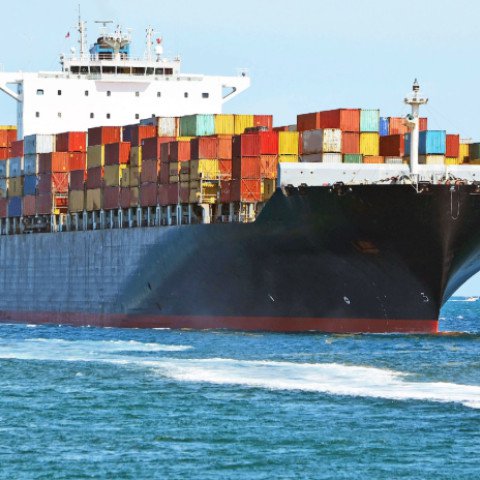
One of the clearest examples of this interconnected supply chain risk emerged in March 2021 when the six-day blockage of the Suez Canal sent shockwaves through global trade, disrupting shipping and driving up freight costs worldwide. For New Zealand businesses, the ripple effects were significant.
Key consequences included:
- Longer transit times: Goods destined for New Zealand were rerouted, adding weeks to delivery schedules.
- Increased costs: Higher fuel prices and congestion fees were passed on to businesses, straining budgets.
- Operational disruptions: Delayed shipments led to production halts and missed deadlines, impacting customer relationships.
This event highlighted the interconnected nature of global trade and how a single point of failure can rapidly cascade across international supply chains, reinforcing the need for proactive risk management.
Supply chain risk management in a more complex environment
At the same time, disruption is rarely confined to one isolated incident. Businesses today are navigating overlapping risks, including geopolitical instability, security threats, extreme weather and natural disasters, cybersecurity risks and regulatory change. These supply chain risks can interact, compound and evolve simultaneously.
In this operating environment, traditional, segmented approaches to risk management are increasingly stretched. While individual events like the Suez Canal blockage highlight the fragility of global systems, they sit alongside a broader, more persistent set of supply chain risks that businesses must actively identify, assess, and manage on an ongoing basis.
Stockpiling, diversification and resilience
In response to ongoing disruption, many businesses are changing how their supply chains are structured. The Gallagher survey shows that nine in ten businesses are either stockpiling goods or actively considering doing so, often to manage tariff uncertainty, shipping delays or geopolitical risk.
For New Zealand businesses managing long lead times and limited alternatives, additional stock can provide an important buffer against uncertainty. However, stockpiling ties up working capital and concentrates risk. Higher inventory levels can increase exposure to loss or damage if risks are not actively managed and aligned with insurance arrangements.
Diversifying suppliers can reduce reliance on a single supplier or trade route, but it also adds complexity. Multiple supply chain partners across multiple regions can increase contractual, quality and regulatory risks, placing greater demands on oversight and governance.
Ultimately, resilience is not achieved through structural change alone. It depends on clear visibility of risk, informed decision‑making and protection strategies that evolve as supply chains continue to shift.
Modern supply chain technology still needs a human lens
Technology is playing an increasingly important role in supply chain management. Real‑time tracking, improved data and scenario modelling are helping businesses understand vulnerabilities and test assumptions.
However, technology is an enabler rather than a solution. Supply chains are shaped by human decisions, from sourcing strategies to contract negotiations, and it is judgement that determines how effectively businesses respond when conditions shift.
This balance between data and judgement is critical for local businesses navigating long transit routes and complex global dependencies.
Navigating supply chain risks with confidence
For decades, supply chains were optimised primarily for efficiency and cost. Today, supply chain risk management carries at least equal weight.
In New Zealand, the link between supply chain health and broader economic outcomes is increasingly clear. Deloitte’s Supply Chain Health Index shows that rising freight costs, delays and uncertainty tend to flow through to tradable inflation within around six months, reinforcing the financial consequences of disruption beyond the supply chain itself.
The Gallagher survey suggests that the most resilient organisations are not those attempting to eliminate supply chain risk altogether. They are the ones that understand where their exposures lie, develop contingency plans and retain the flexibility to respond when pressure builds elsewhere in the system.
This is where supply chain risk insight and practical support intersect. When disruption strikes, the speed and quality of response can be just as important as the cover in place.
Gallagher works closely with organisations to identify risks and puts supply chain management insurance solutions in place ahead of potential disruption. When an event does occur, our focus quickly shifts to supporting recovery, managing claims efficiently and regaining operational momentum.
In an environment where uncertainty is an ongoing condition, robust preparation and trusted support can make the difference between disruption endured and resilience sustained.
Download this article here.

Discuss your supply chain risk mitigation strategy with Gallagher
Gallagher works alongside clients to help them understand how risks are changing, and how supply chain insurance and risk management strategies can adapt accordingly. By combining global insights with local expertise, our brokers can help you navigate uncertainty with greater confidence.