Hit enter to search or ESC to close

15 September 2026
Insurance Market Update - September 2026
The insurance market continues to be buyer friendly across most major classes of New Zealand business. There is a strong supply of capacity and insurance companies are still looking for growth which, when combined, puts downward pressure on insurance premiums.

However, there are signs that local market conditions may be starting to diverge from broader global trends.
In New Zealand, NZI and Vero account for around 50% to 60% of the intermediated insurance market. Given their scale and broad participation across both commercial and personal insurance lines, their performance provides a useful indication of wider market conditions.
NZI is part of the IAG group of companies, while Vero sits within the Suncorp Group. Both Australian-listed insurers released their full-year financial results in August 2026.
Although both insurers reported healthy profits, their results were lower than those achieved in 2025. IAG (which includes NZI, AMI and State) reported that its underlying insurance profit declined by 18.9% in 2026, while Suncorp New Zealand, which includes Vero and AA Insurance, reported a New Zealand insurance trading result that was 16.7% below the prior period.
Both insurers pointed to soft market conditions and a higher level of natural hazard claims as key drivers of their weaker results.
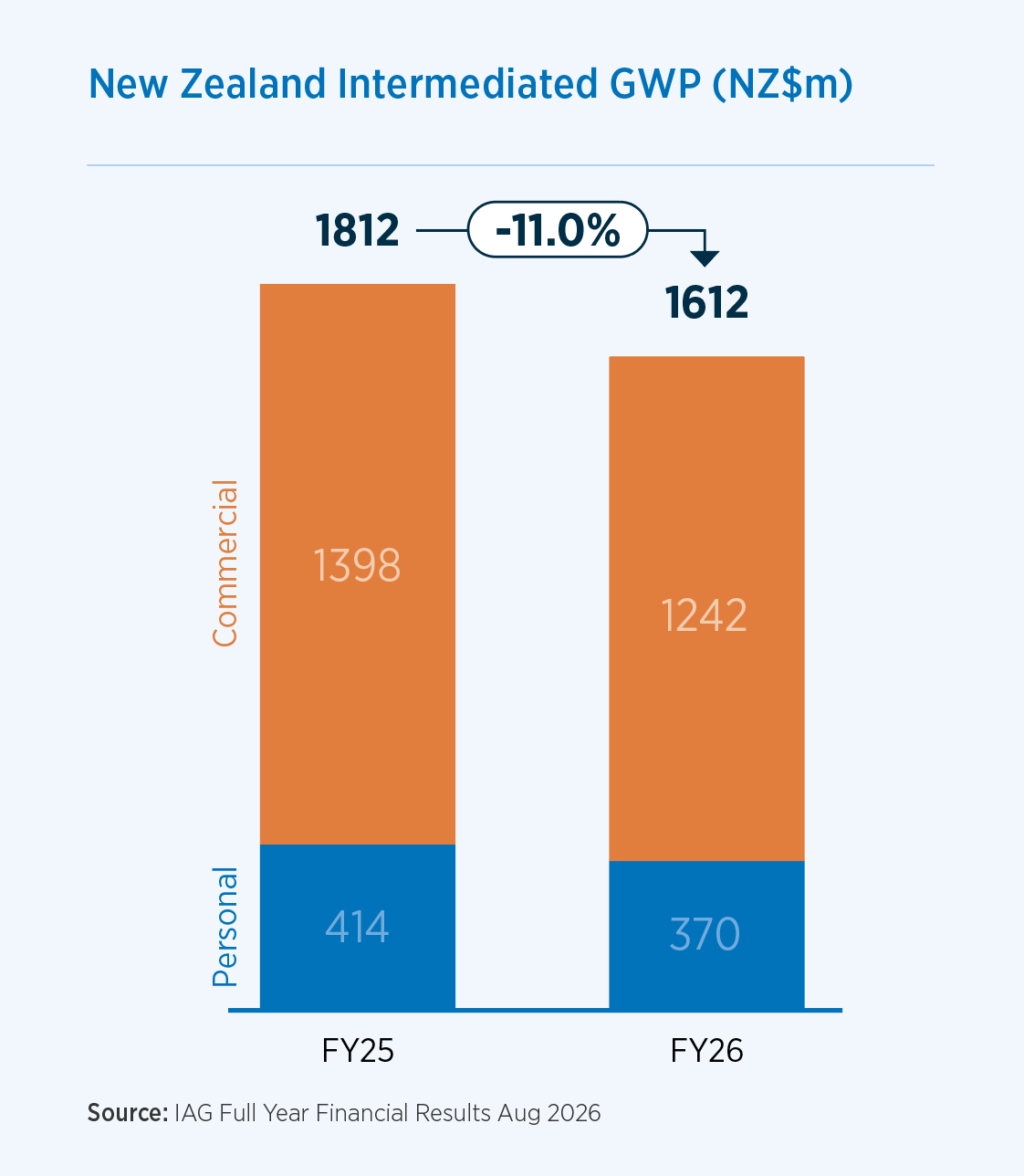
NZI reported an 11% decrease in gross written premium (GWP) for the 2026 financial year, representing a drop of approximately $200 million in income. Against this, they also reported a $53 million increase in natural peril claims (natural hazards).
At Gallagher, we have also observed a rise in claims activity, with our claims data showing an 8% increase in claim volumes compared with the same period last year.
When premium rate reductions are outpacing claim costs and profitability begins to fall, it can be an early sign that the New Zealand commercial insurance market is nearing the bottom of the cycle. While market conditions remain favourable for buyers, these are trends worth monitoring as they may influence insurer pricing and appetite over time.
Globally, however, the picture remains somewhat different.
Reinsurance capacity remains abundant. Reinsurance is purchased by all primary insurers such as NZI and Vero to protect their exposure to catastrophic losses arising from events like earthquakes and cyclones and typically represents one of an insurer’s largest expenses.
Reinsurance pricing is heavily influenced by global catastrophe losses, and with the first half of 2026 relatively quiet in terms of major events there is less upward pressure on reinsurance pricing.
According to Gallagher Re, global insured losses from natural catastrophe events during the first half of 2026 totalled US$46 billion, the lowest first-half result since 2019 and compares favourably to the 2016 to 2025 first half average of US$64 billion.
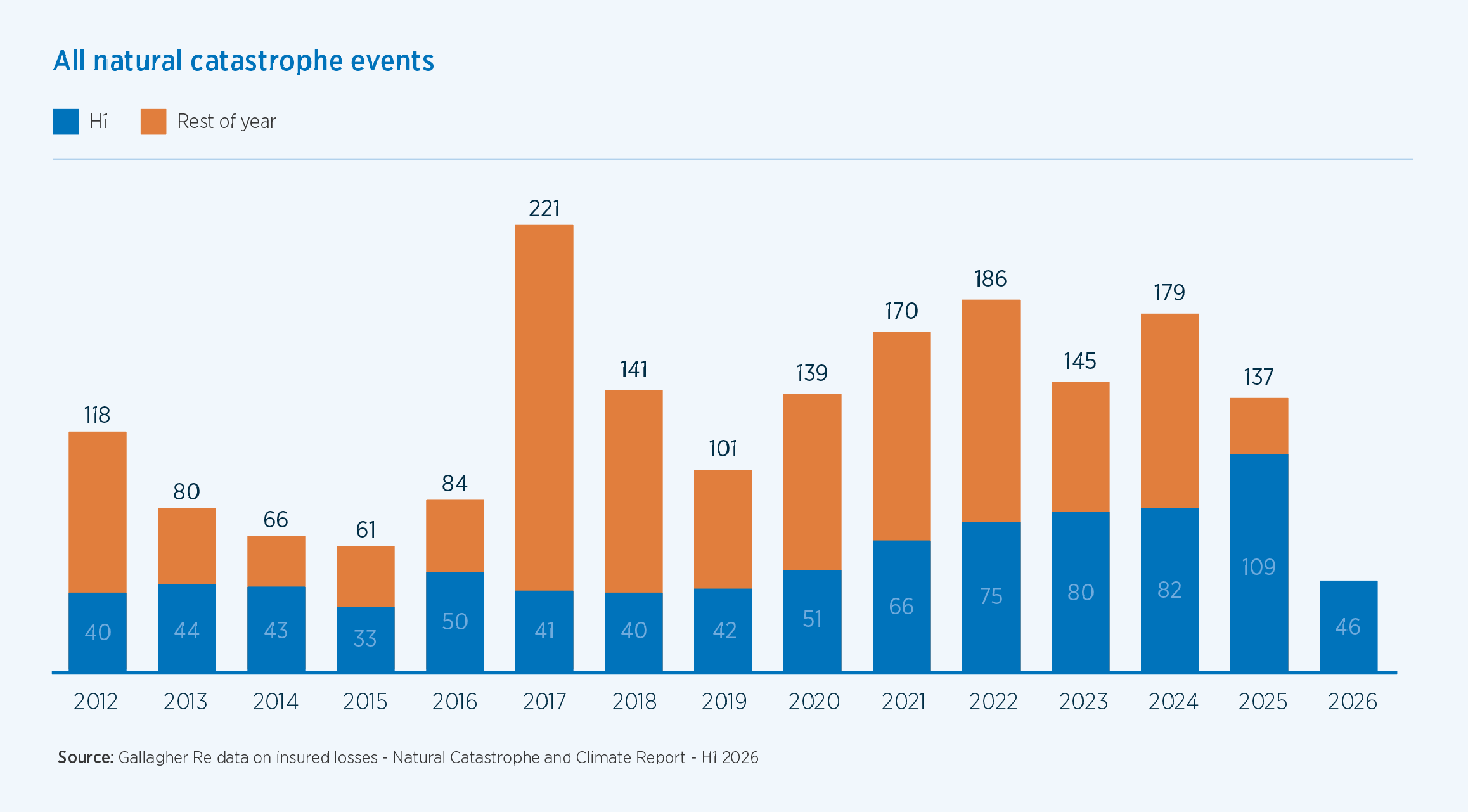
The first half of 2026 also marked the fifth consecutive quarter without a single event generating more than US$10 billion in insured losses.
Since 2022 there have only been five catastrophic events exceeding the US$10 billion threshold, Hurricane Ian in 2022, Hurricanes Helene and Milton in 2024, and the Palisades and Eaton wildfires in 2025. Comparatively, between 2017 and 2021 there were 13 such events, which drove the hardening market conditions experienced in subsequent years.
As capital growth continues to exceed premium growth, the gap between reinsurance supply and demand continues to widen, reinforcing current reinsurance pricing.
With weather forecasts pointing to a less active Atlantic hurricane season and the potential for lower industry losses during the remainder of the year due to a strengthening El Niño, upcoming reinsurance renewals may continue reinforcing soft market conditions, pleasing buyers of insurance.
However, as with all insurance markets, conditions can change quickly following significant loss events whether locally or internationally. In New Zealand events such as the 2010 Canterbury earthquakes, the 2023 Auckland Anniversary floods and Cyclone Gabrielle significantly impacted the market as have numerous past hurricanes in the US.
What we are currently seeing in the New Zealand insurance market is a material reduction in the premium pool alongside a large increase in smaller, frequent weather events causing costly claims. Together, these are squeezing the profit margins of insurance companies.
If this trend continues, increasing claim costs and pressure on insurer profitability could moderate the pace of further premium reductions. While the prevailing market environment continues to support buyers these factors will be important to watch over the coming months.
New Zealand still remains exposed to significant natural catastrophe risks. A major earthquake, cyclone or catastrophic weather event could have the potential to rapidly alter market conditions.
New Zealand claims trends
As already noted, claims activity has continued to increase across New Zealand. We’ve seen an 8% rise in claims from our clients compared with the same period last year, with our claims team managing around 80,000 claims over the past 12 months.
Weather-related losses remain a significant contributor to this trend. During 2026, our clients lodged a large number of claims arising from seven separate weather events, with the largest being the January flood and slips event and the February weather system that affected much of the eastern side of the country.
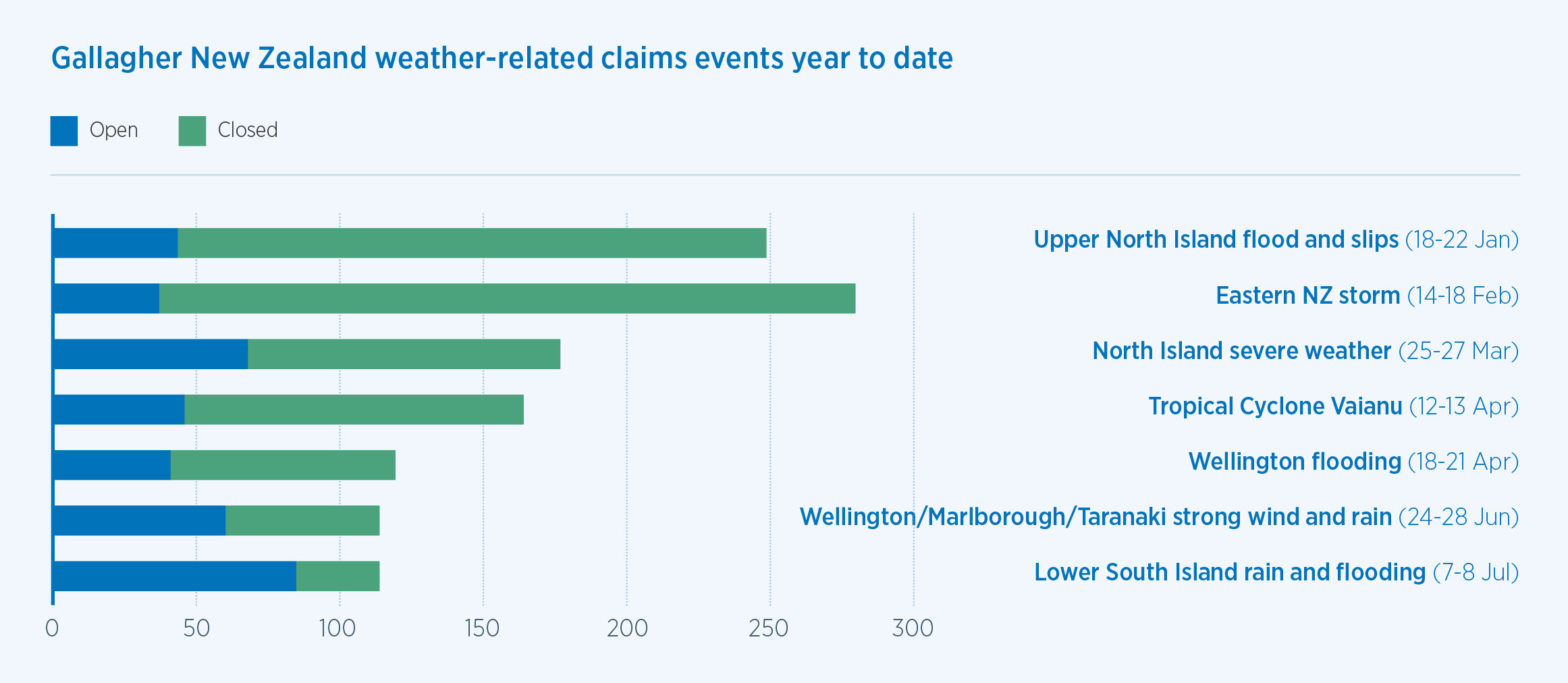
Most regions have experienced some form of severe weather during the year and as a result insurers are reporting a marked increase in claims. IAG reported a 256% increase in storm-related claims compared with 2025.
This reflects a broader trend of weather events occurring more frequently. Historically, over a 15-year timeline storms affected parts of New Zealand approximately once every 19 days. Over the past 12 months that frequency has increased to once every eight days, making significant storm activity a near-weekly occurrence.
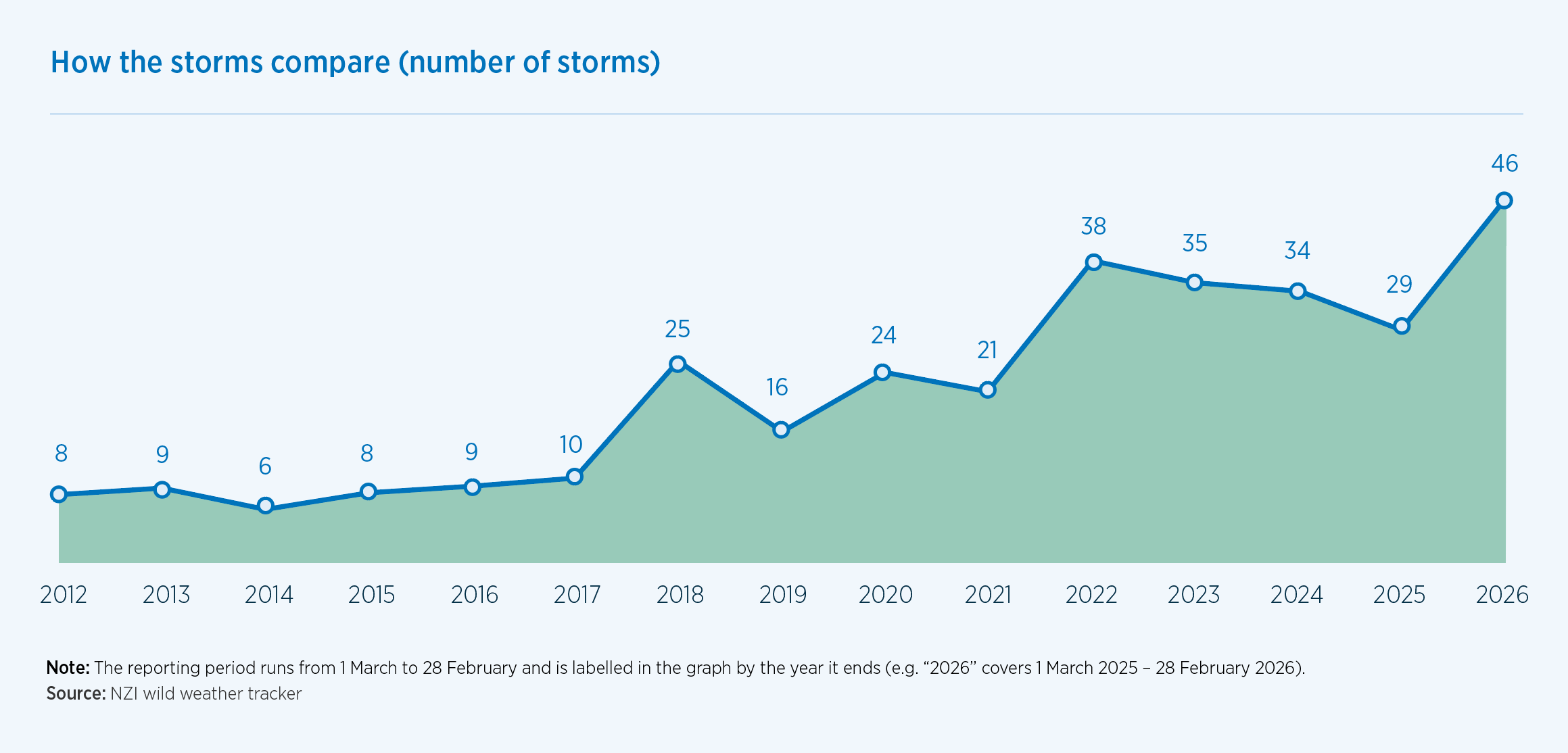
Claims costs are also being influenced by wider economic conditions, with factors such as rising fuel prices contributing to repair-cost inflation thereby increasing the overall cost of settling claims.
Building Amendment Bill
The Building Amendment Bill was introduced to Parliament on 28 June 2026 and proposes a range of reforms to the Building Act 2004 which could have significant implications for the construction sector and its insurance requirements.
As the Bill continues through Parliament, the information below provides a general overview of the proposed reforms and areas likely to be of interest to businesses operating in the sector.
Key proposals include:
• Moving from a joint and several liability framework to a proportionate liability regime
• Introducing mandatory home warranties for most new homes and major residential renovations
• Requiring professional indemnity insurance for design professionals
• Creating faster consenting pathways for certain sustainable and solar-equipped homes
• Improving consistency and efficiency across Building Consent Authorities
The Bill is currently before the Select Committee, with submissions closing on 15 November 2026 and a report back to Parliament due on 29 December 2026.
Of particular interest to the insurance market are the proposed liability and insurance requirements.
The move to a proportionate liability framework would represent a significant change for the building sector.
While the intention is to allocate responsibility more directly to the parties at fault, the legislation also proposes a range of consumer protection measures designed to maintain confidence in the building system.
The Bill proposes to make Professional Indemnity (PI) insurance mandatory for design professionals, including architects, engineers, designers and building surveyors involved in building design or compliance activities. While the proposed legislation does not currently specify minimum limits of cover, it requires professionals to maintain what is described as an “adequate level of indemnity”. Failure to carry PI insurance could result in penalties of up to $50,000 for individuals and $150,000 for entities.
Mandatory home warranties have also been proposed for residential projects valued above $100,000. These warranties could be provided through either insurance or guarantee products. Issuers of Home Warranties will be regulated by Ministry of Business, Innovation, and Employment (MBIE).
If enacted in its current form, the changes relating to liability, professional indemnity insurance and home warranties would come into force one year after Royal Assent.
As the Bill progresses through Parliament, businesses operating within the construction and building sector should consider how the proposed changes may affect their insurance arrangements and risk management obligations. Our brokers are continuing to monitor developments and can provide guidance on the potential implications for your organisation.

Be sure to engage with your broker to discuss tailored insurance solutions which optimise your coverage and leverage the current market conditions.